
"Western culture"
2000 article(s) found

Coffee Culture Influence: Chinese Tea and Western Coffee Culture
(3)Tea culture of heaven, earth, human unity and coffee culture of heaven and man dichotomy tea culture is heaven, earth, human unity taoist doctrine. Taoism believes that heaven, earth and man are equal, and should adapt to nature and actively understand the law, so that people can get the greatest satisfaction. Tea is produced in the forest of the mountains. It receives the essence of heaven and earth and the rain dew of abundant earth. It contains Taoism's indifference, tranquility and return to nature.

Oriental drinks popular in the West: the Historical and Cultural significance of Coffee
As an oriental drink, coffee is endowed with great western meaning. For hundreds of years, this mellow bitterness attracted all kinds of people, and therefore permeated all fields of modern western society, flowing like blood in the land of Europe for centuries. Today, it has become a typical representative of western culture, and once again returned to the eastern world. This is coffee.

Coffee-- Eastern Beverage and Western Culture
This is the earliest painting known about a British cafe. This 1674 woodcut comes from a single page of Paul Greenwood's advertisement for the virtues of sober and wholesome coffee drinks. Coffee, a familiar but mysterious drink, is like a strong wind blowing into our world from the west, and gradually changing our lives and temperament. You

China's coffee and tea, whether China contains coffee or coffee stands proudly in China.
Professional coffee knowledge exchange more coffee bean information please follow the coffee workshop (Wechat official account cafe_style) coffee and tea, is one of the representatives of Chinese and Western cultures. A mysterious leaf reflects the plant character of Easterners, while the endosperm that gives birth to life represents the animal character of Westerners. During the New Culture Movement, Li Dazhao wrote the article "differences between Chinese and Western cultures".
Chinese tea and western coffee culture-2
(3) the unity of heaven, earth and man in tea culture and coffee culture the dichotomy of tea culture is the Taoist theory of the unity of heaven, earth and man. Taoism believes that heaven, earth and man are equal and should adapt to nature and take the initiative to understand the law, so that people can get the greatest satisfaction. Tea comes from the forest of the mountains, receives the essence of heaven and earth, and bears the rain and dew of abundant soil, which contains Taoism's indifference, serenity and return to nature.

Common sense of Coffee Culture Tea Culture History and Coffee Culture History
Tea, coffee and cola are called the three largest drinks in the world, and the largest consumption is tea and coffee. Coffee plays an irreplaceable role in the life of westerners, no matter in school, company, shopping mall or at home, everyone enjoys it with a coffee cup, while tea is deeply rooted in Chinese life, it is not only a kind of drink, but also carries Chinese culture. Tea and coffee represent

Basic knowledge of Fine Coffee Culture characteristics of Western Coffee Culture
Like the tea culture in China, coffee culture also contains rich history and connotation. The Arabs first dried and boiled the coffee beans and drank the juice as a stomach medicine, thinking that it could help digestion. It was later found that coffee also had a refreshing effect. Because Islam forbids religious people to drink alcohol, coffee is used instead of alcoholic beverages as a refreshing drink. ten
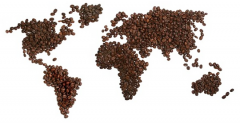
Chinese Coffee History Chinese Tea and Western Coffee Culture
(3) the unity of heaven, earth and man in tea culture and coffee culture the dichotomy of tea culture is the Taoist theory of the unity of heaven, earth and man. Taoism believes that heaven, earth and man are equal and should adapt to nature and take the initiative to understand the law, so that people can get the greatest satisfaction. Tea comes from the forest of the mountains, receives the essence of heaven and earth, and bears the rain and dew of abundant soil, which contains Taoism's indifference, serenity and return to nature.

Coffee Culture History Coffee Culture in Japan
Coffee was first introduced to Japan by Dutch missionaries and traders around 1630, when the Dutch were trying desperately to spread coffee to their Asian colonies of Sri Lanka and Java. But the Japanese do not accept this strange drink. It wasn't until the Meiji Restoration that Japanese society began to learn from the West that people gradually accepted the advanced West.
A comparison between Chinese Tea and Western Coffee Culture
(3) the unity of heaven, earth and man in tea culture and coffee culture the dichotomy of tea culture is the Taoist theory of the unity of heaven, earth and man. Taoism believes that heaven, earth and man are equal and should adapt to nature and take the initiative to understand the law, so that people can get the greatest satisfaction. Tea comes from the forest of the mountains, receives the essence of heaven and earth, and bears the rain and dew of abundant soil, which contains Taoism's indifference, serenity and return to nature.
Western culture, western etiquette knowledge
It's polite to cook to dip bread in sauce and eat it until the sauce is gone. Be careful not to lick the bread plate very clean, but to fork the bread has been torn into small pieces, and then dip a little sauce to eat, is elegant practice. When wiping your mouth with the inside of a napkin, be sure to wipe it with a napkin and avoid using your handkerchief. Meals are folded inside to rub instead of
The characteristics of Western Coffee Culture
Like the tea culture in China, coffee culture also contains rich history and connotation. The Arabs first dried and boiled the coffee beans and drank the juice as a stomach medicine, thinking that it could help digestion. It was later found that coffee also had a refreshing effect. Because Islam forbids religious people to drink alcohol, coffee is used instead of alcoholic beverages as a refreshing drink. ten

The spread and Development of Coffee in China-Coffee and Western Culture
The spread and development of coffee in China-Coffee and Western cultural coffee were not introduced into China for a long time, and it was not until 1884 that coffee was first planted in Taiwan. In the mainland, the earliest coffee cultivation began in Yunnan. At the beginning of the 20th century, French missionaries brought the first batch of coffee saplings to Binchuan County, Yunnan Province, and coffee began to be grown on the mainland. Naturally speaking, I

Chinese coffee culture
In the process of globalization, western culture has also spread in China. Take coffee culture for example. At the earliest time, drinking coffee was a western culture, but now it is a global culture.
The brand coffee of Chinese people should make "MADE IN CHINA" well-deserved.
Western coffee culture is equivalent to Chinese tea culture, in the earliest days, drinking coffee is the western culture, but now coffee is no longer only Westerners, has become a global culture. Among them, China has its own unique characteristics in accepting the western coffee culture. In China, some areas have established their own unique coffee brands, which is not only a popular way of life.

Cross-strait Coffee official website _ how much is the fee for cross-strait coffee franchise
= "Cross-Strait Coffee official website" = = professional coffee knowledge exchange more coffee bean information please pay attention to coffee workshop (Wechat official account cafe_style) coffee, Western food and other Western food, if integrated with Chinese traditional culture, I believe it will create a new market comprehensive effect (Synergy). Before it is popular in mainland coffee shops, cross-strait coffee has long seen the mainland coffee market.

Chinese people's own Coffee Culture
In the process of globalization, Western culture has also spread in China. Take coffee culture for example. In the earliest days, drinking coffee was the western culture, but now it is a global culture.
Coffee is an index of Western symbols.
During the Cultural Revolution, the trinity of coffee, butter and bread became a symbol of Western corrupt ideology. It implies corruption, extravagance, indulgence and betrayal. It is the opposite sign of Puritan politics and marks a sinful way of life. But Jiang Qing, the revolutionary standard-bearer herself, was the biggest supporter of bourgeois coffee, monopolizing the right to drink coffee in Zhongnanhai. the more

Prospect of Coffee Market in China
First, with the deepening of China's reform and opening up, the popularity of coffee culture in China started relatively late, and it was not well known by the Chinese people before the 1990s. However, since the 1990s, with the deepening of China's reform and opening up and the continuous infiltration of western culture, coffee, the vanguard of western culture, has gradually entered the lives of the people. Now, with the economic downturn,
Development of Coffee Culture in China
In the process of globalization, Western culture has also spread in China. Take coffee culture as an example. In the earliest days, drinking coffee was a western culture, but now it is already a global culture, but each region still has its own unique characteristics. Take espresso, for example, it has established its own brand and formed its own unique coffee culture in China.